
The 3135 Movement in Replica Rolex: A Buyer’s Reality Check
Why the Movement Matters More Than the Dial
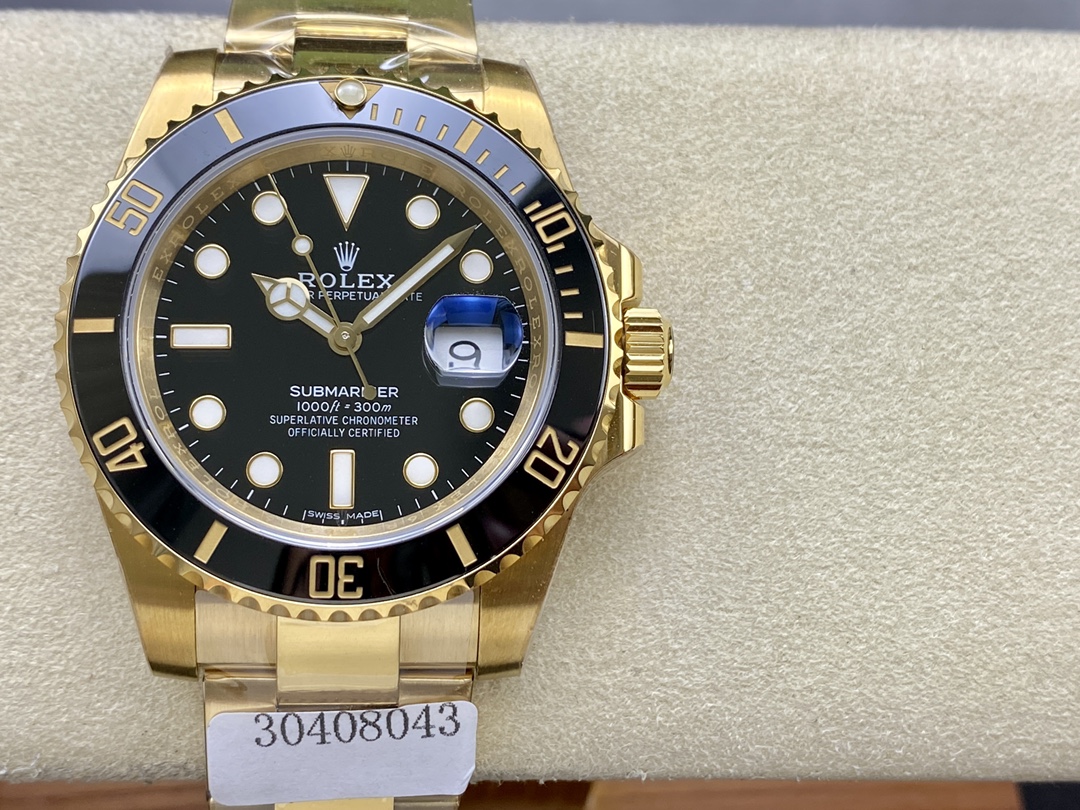
Most first-time buyers fixate on the bezel, the crystal, or the cyclops magnification. I have seen this mistake hundreds of times. They hold the watch at arm’s length, nod approvingly at the rehaut alignment, and then ignore what is ticking inside. That is the wrong order of priorities.
In my experience, the movement is the single biggest differentiator between a watch that feels genuine after six months and one that becomes a paperweight after six weeks. The case and bracelet can be replicated with astonishing accuracy today. Top-tier factories have mastered laser engraving, ceramic bezel color matching, and even the correct brushing direction. But the movement? That is where the money, the engineering, and the long-term durability live.
The reason is simple: a Rolex is not a piece of jewelry. It is a mechanical tool designed to run continuously for years with minimal intervention. If the movement inside your replica cannot do that, then the watch fails its primary purpose. The dial might look perfect when you photograph it for social media, but if the timekeeping drifts 20 seconds a day or the date flips at 4 AM, the illusion breaks immediately.
What I have learned from owning and handling dozens of replicas is this: the movement dictates the wearing experience. A reliable movement means you wind it, set it, and forget it. An unreliable movement means you are constantly checking your phone to see how far off you are. That constant checking kills the enjoyment. So when I evaluate any replica, I start with what is inside, not with what is on top.
The 3135 Clone: What It Actually Delivers
The Rolex 3135 is the most famous automatic movement in modern watchmaking history. It powered the Submariner and Datejust lines for over three decades. Rolex built it to be tough, serviceable, and accurate. When replica factories set out to copy it, they faced a problem: they could not simply reverse-engineer the visual appearance. They had to replicate the engineering logic behind it.
The current 3135 clone used in top-tier replicas is a genuine 1:1 clone in the structural sense. That does not mean every screw is in the exact same position as a genuine Rolex 3135. It means the gear train layout, the winding mechanism, and the escapement geometry follow the same principles. The clone uses a similar bridge structure with two main plates. The automatic winding module sits on top, and the gear train sits below, just like the original.
From what I have seen, the most important similarity is the balance bridge. Genuine 3135 uses a full balance bridge instead of a simple balance cock. This provides better shock resistance. The better clones replicate this bridge design, and that is one of the reasons they survive daily wear better than cheaper alternatives that use a cock design.
Power reserve on the authentic 3135 is approximately 48 hours. The clone versions vary, but the best ones deliver between 42 and 46 hours in real-world use. That is close enough that you will not notice the difference during a weekend rotation. If you wear it daily, the power reserve is irrelevant because the automatic winding keeps it topped up.
The actual performance, however, is where experience matters. In my collection, I have had 3135 clones from different production years. The earlier versions, around 2018, suffered from inconsistent amplitude and occasional stalling during the date change. The current generation, produced since 2022 by the leading factories, is significantly better. The best examples regulate to within +4 to +8 seconds per day straight out of the box. That is not Rolex chronometer certification, but it is better than most mid-tier Swiss movements.
Maintenance is a different conversation. The genuine 3135 is a serviceable movement that any competent watchmaker can overhaul. The clone is more difficult. Many repair technicians will not touch them because parts are not standardized across factories. However, the better clones use compatible balance staffs and mainsprings with genuine 3135 parts. That gives you options if something fails. The cheaper clones use proprietary components, and once they break, you replace the whole movement.
So the question is not whether the clone is identical to the genuine. It is whether the clone offers a stable, reliable experience that does not require constant adjustments. For the best 3135 clones, the answer is yes. But you have to know which factory produces them.
Factory Comparison: Where the 3135 Clone Lives
Not all 3135 clones are equal. I have learned this the hard way. There are three main sources for 3135-powered replicas today: the Clean factory, the VS factory, and the ARF factory. Each approaches the movement differently, and the differences matter more than the dial or bracelet details.
The VS factory, formerly known as VSF, has a reputation for producing the most accurate clone movements in the industry. Their 3135 clone is a 1:1 structural replica with a decorated rotor that looks correct even under a loupe. The bridge plates have the correct Geneva stripes and perlage finishing. The balance wheel uses the same four-screw adjustment system as the genuine. In terms of visual authenticity, VS is the benchmark.
But visual authenticity does not always equal functional reliability. I have handled VS 3135 watches that ran beautifully for two years and others that stopped dead after three months. The inconsistency is frustrating. The problem is not the movement design. The problem is quality control during assembly. VS produces huge volumes, and not every watch receives the same attention during regulation.
Clean factory takes a different approach. Their 3135 clone is not as visually decorated as the VS version. The finishing is simpler, and the rotor does not have the same level of detail. However, Clean is known for stricter quality control. The watches I have purchased from Clean have been more consistent out of the box. The amplitude is higher, the beat error is lower, and the timekeeping stays stable longer. Clean sacrifices some visual accuracy for functional reliability.
ARF is a third option. Their 3135 clone is the oldest design among the three. It is not a 1:1 clone in the same sense. The bridge structure differs slightly from the genuine, and the automatic winding mechanism is simpler. This makes the movement easier to produce and cheaper to buy. However, the trade-off is a noticeable difference in the winding feel. The rotor spins more loudly, and the power reserve is shorter, usually around 38 hours.
In my experience, the best recommendation depends on your priorities. If you care about visual accuracy under a loupe and are willing to accept the risk of a QC issue, VS is the choice. If you want a watch that runs reliably day after day with minimal fuss, Clean is the better bet. ARF is for budget-conscious buyers who understand they are getting a functional movement that looks the part from a distance but does not pretend to be a genuine clone.
The key point here is that the movement in the watch is the same type, but the execution is different. Do not assume that a 3135 label means the same performance across all factories. The factory matters as much as the movement.
Common Misconceptions That Cause Buyer Regret
The first major mistake I see is the assumption that a perfect exterior means a perfect interior. Buyers look at a replica, see that the rehaut engraving matches the genuine, and decide that the watch is good enough. They overlook the movement entirely. The reality is that exterior details are easier to replicate than mechanical reliability. A factory can perfect a dial in one month. Perfecting a movement takes years of iterative production. The best-looking replica with a junk movement is still a junk watch.
I have bought a few of those myself. The dial looked incredible. The bezel action was crisp. The case finish rivaled my genuine Submariner. But the movement lost 30 seconds a day, the date would not align straight, and the winding felt rough and gritty. Within six months, the watch stopped completely. The lesson was expensive. The movement is the skeleton of the watch. If the skeleton is weak, the entire watch collapses.
The second mistake is believing that a clone movement is mechanically identical to the genuine. It is not. The materials are different. The tolerances are different. The lubrication is different. The genuine 3135 uses proprietary alloys for the escapement wheels. The clone uses standard steel. The genuine uses a specific synthetic lubricant that lasts for years. The clone uses a cheaper grease that degrades faster. These differences affect longevity, not initial accuracy. The clone will keep time well for the first year, but after that, the oil starts to dry out, the friction increases, and the amplitude drops.
I have seen buyers complain that their watch suddenly started losing time after 18 months. They blame the factory, but the real cause is that the movement reached its natural service interval. The difference is that a genuine 3135 can be serviced multiple times. A clone movement often cannot be serviced economically. The cost of a full overhaul can exceed the price of a new replica. So you are not buying a watch that lasts forever. You are buying a watch that performs well for a limited period.
The third mistake is not knowing the correct winding direction. The 3135 winds in both directions. The clone also winds in both directions. But the feel is different. The genuine has a smooth, continuous feel when winding manually. The clone has a slight roughness because the gears are not polished to the same standard. That roughness is not a defect. It is a characteristic of the materials used. Accept it or choose a different type of watch.
Wrist Test vs Macro Test: The Real Performance Metric
There is an obsession in the replica community with macro photography. People take 40x magnification photos of dial markers, rehaut engravings, and date window fonts. They analyze every pixel. This is the macro test. It tells you what the watch looks like in a static, artificial environment. It does not tell you how the watch performs on your wrist.
The wrist test is entirely different. It involves wearing the watch continuously for at least two weeks. You check the accuracy daily at the same time. You observe how the date flips at midnight. You feel the winding action when you rotate your wrist. You notice whether the movement loses time when you type at a keyboard or gains time when you walk vigorously. You evaluate whether the watch stops if you leave it in a drawer for a day without winding.
From what I have seen, many replica buyers never perform the wrist test. They receive the watch, check it against their phone camera, and then put it in a box. They are afraid to wear it because they worry that wearing it will degrade it. That is a fundamental misunderstanding. A replica movement that cannot handle daily wear is a replica that should never have been bought.
In my own collection, I had a 3135-powered watch that passed the macro test beautifully. The dial markers were aligned. The cyclops magnification was correct. The engraving on the clasp was deep and sharp. But when I wore it for a week, the movement started losing 15 seconds per day. I regulated it myself, but the issue returned after two days. The problem was not the regulation. The problem was that the balance spring was not tempered correctly. The macro test could not detect that. The wrist test caught it immediately.
So here is the rule I follow: the macro test tells you whether the watch is pleasant to look at. The wrist test tells you whether the watch is pleasant to own. If you only care about the first, buy a quartz replica and save the money. If you care about the second, choose your movement carefully, buy from a factory with consistent QC, and wear the watch for a full week before making a final judgment.
Why Movement Specs Are Overrated for Most Buyers
The replica watch forums are full of technical discussions. People argue about beat rates, amplitude values, and lift angles. They compare the clone 3135 to the genuine 3135 in terms of jewel count and mainspring torque. These are interesting details for horology enthusiasts, but they are largely irrelevant for most buyers.
Here is the brutal truth: unless you own a timegrapher and know how to use it, the specific technical specifications of the movement do not matter to you. What matters is the experience. Does the watch run within acceptable accuracy? Does the date flip correctly? Does the rotor wind smoothly? These are the only questions that affect your daily enjoyment.
I have purchased replica watches with movements that measured poorly on a timegrapher but performed beautifully on the wrist. The amplitude was low, the beat error was high, and the lift angle was wrong. But the watch kept time within +6 seconds per day, and I never needed to adjust it. I have also purchased watches with perfect timegrapher readings that stopped working after two weeks because the gear train had a manufacturing defect that only appeared under continuous load.
The overemphasis on technical specs leads buyers to obsess over the wrong variables. They reject a good watch because the amplitude measures 260 degrees instead of 290. They accept a bad watch because the beat error is 0.1 milliseconds. This is not useful decision-making. It is an attempt to quantify a subjective experience using numerical data that the average buyer cannot interpret correctly.
My advice is to prioritize reliability and stability over raw performance numbers. A watch that runs at a consistent +8 seconds per day is better than a watch that runs at +2 seconds per day but fluctuates wildly depending on wrist position. Consistency tells you that the movement is healthy. Fluctuation tells you that something is wrong with the escapement or the balance wheel. You do not need a timegrapher to detect fluctuation. You just need to wear the watch and observe.
The same applies to power reserve. A 48-hour power reserve is ideal, but a 40-hour reserve is fine if you wear the watch daily. The issue only arises if you rotate watches and leave the replica sitting for two days. In that case, you need to wind it before wearing. That is not a major inconvenience for most buyers. So stop obsessing over the numbers and start evaluating the experience.
Based on Experience: What I Recommend
If you are considering a 3135-powered replica, here is the path I have found to be the most successful.
First, buy from a factory that uses the current generation 3135 clone, not the older version. The older version has a weaker mainspring and a less efficient winding system. You can identify the current generation by looking at the rotor. The new version has a more detailed finish with a logo that matches the genuine. The old version is plain and unmarked. The difference in performance is noticeable.
Second, have the watch regulated immediately after purchase. I know this sounds like an extra step, but it pays off. The factories regulate the movements to an acceptable standard, but they cannot adjust for your specific wearing habits. A simple regulation by a competent watchmaker can improve accuracy from +10 seconds per day to +4 seconds per day. This extends the useful life of the movement because it reduces the wear on the escapement.
Third, wind the watch manually once a week. This exercises the mainspring and keeps the lubrication distributed evenly. Do not wind it aggressively. About 20 turns of the crown is enough. This habit prevents the grease from pooling in one area, which is a common cause of stiffness in the automatic winding system.
Fourth, accept that the watch will require replacement after 2 to 3 years of daily wear. The clone movement is not built for decades of service. It is built for a few years of reliable use. Consider the cost per year of ownership. If the watch costs 500 dollars and lasts 3 years, that is 166 dollars per year. That is a reasonable price for the enjoyment it provides. If you need a watch that lasts forever, buy the genuine. The replica is a different product with a different lifecycle.
Fifth, buy from a source that has a track record of handling returns and exchanges. I have had good experiences with rolexreplicas.us.com/ because they understand that the movement is the critical component. They will accept a return if the movement has a serious issue, and they will replace it without delay. This security is worth paying a slight premium.
Finally, do not expect the clone to feel exactly like the genuine. The winding action is a bit rougher. The crown feels slightly less crisp. The date change has a small hesitation. These are not flaws. They are differences. If you can accept those differences, the 3135 replica will give you a fulfilling ownership experience. If you cannot accept them, then no replica will satisfy you, regardless of the movement.
FAQ
0 Commenti